- Playground Post
- Posts
- 🛝 8.2 Million Kids Need Special Ed. Safety Net Just Got Split Nine Ways.
🛝 8.2 Million Kids Need Special Ed. Safety Net Just Got Split Nine Ways.
What this means for educators + more
Welcome to Playground Post, a bi-weekly newsletter that keeps education innovators ahead of what's next.
This week's reality check: The federal government is considering whether to stop collecting most of the education data the country relies on. Meanwhile, nine states want to pull devices out of classrooms after a decade of going all-in on one-to-one programs. And the 8.2 million students who depend on special education services are watching their federal safety net get split across multiple agencies.
Data Gem
State higher education funding grew just 1% before inflation in fiscal 2026, the slowest pace since 2021. Of 50 states, 17 actually cut funding while 33 increased it. Fitch Ratings flagged six states where public college budgets are under particular pressure: Illinois, Indiana, Louisiana, Missouri, Ohio, and South Carolina.
The Federal Government Might Stop Tracking How Students Are Doing

The Institute of Education Sciences is the branch of the U.S. Department of Education responsible for collecting, analyzing, and maintaining the country's education data.
It runs the National Assessment of Educational Progress, also known as the Nation's Report Card and tracks longitudinal studies on student outcomes.
It produces the research that districts and states use to make decisions.
Last March, IES was gutted by mass layoffs. It left only a handful of employees to run the entire operation.
Now an internal 95-page report is recommending the agency go further.
The report recommends "six big shifts" for the institute. Among them: a "thorough review" of data collections, including considering discontinuation "as warranted."
The report's central argument states that "the only data statutorily required by name" in federal legislation is NAEP.
Everything else, including student statistics, educator workforce data, and high school outcomes tracking, is how the agency "has chosen to operationalize flexible and often nondescript 'shall' statements" in the law.
In other words, most of what NCES collects is technically discretionary.
Four active longitudinal studies are on the table for cuts: the Early Childhood Longitudinal Study, High School & Beyond, the High School Longitudinal Study of 2009, and the Beginning Postsecondary Longitudinal Study.
The report also said "many of the NCES products have not kept pace with evolving needs."
It recommended the agency narrow its focus to "the most urgent education challenges" informed by state and district leaders "rather than spreading resources across many disconnected projects."
The department said on February 27 that it is considering the report's recommendations.
When the layoffs happened a year ago, former NCES employees warned that data from the Nation's Report Card and other surveys would become scarce and in some cases unreliable due to the reduced workforce.
Here's the gap that should concern every education innovator: if the federal government scales back or discontinues these data collections, there is no private-sector alternative ready to fill the void.
For education entrepreneurs, this is a once-in-a-generation opening. The potential discontinuation of federal longitudinal studies creates immediate demand for independent education data platforms that can track student outcomes over time. Districts and states that lose access to federal benchmarking data will need private analytics services and research-as-a-service companies.
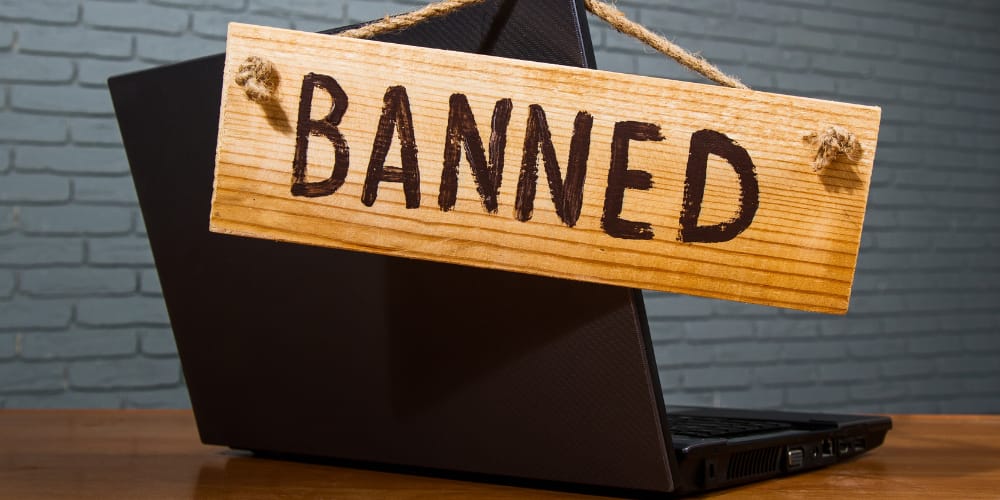
9 in 10 Schools Gave Students a Device. Now Legislators Want Them Back.
When Kim Whitman's son was in kindergarten in 2015, it was the first time their school district rolled out a one-to-one device program.
Every child got an iPad and was required to bring it home each night to charge it.
"My children never had a device and suddenly they had these iPads at home I had to manage," Whitman, now the co-lead for the Distraction-Free Schools Policy Project, says.
A decade later, the scale of that shift is massive. According to federal data, 9 in 10 public schools had a one-to-one device program for the 2024–25 school year.
Device adoption catapulted during COVID, thanks to federal dollars and the rush to virtual schooling. But the decisions were made without fully thinking through the consequences.
"For a lot of logistical reasons and necessity through the pandemic, we sort of went all in," says Kate Blocker, director of research and programs at Children and Screens: Institute of Digital Media and Child Development. "The question people are starting to ask themselves is, 'Are we seeing those benefits?'"
The evidence says not always. A newly released study led by University of Pennsylvania professor Angela Duckworth found teachers estimate 1 in 3 students use laptops during class for non-academic purposes, including texting and social media.
Now nine states have introduced "Safe Schools Technology" legislation.
Kansas is pushing to ban hardware devices in elementary schools entirely and cap classroom screen time at one hour a day in middle school, 90 minutes in high school. Oklahoma, West Virginia, and Missouri introduced bills limiting screen time while keeping devices. Vermont introduced a parent opt-out.
The push goes beyond phones. Whitman says the legislation isn't about banning technology entirely, but requiring schools to limit it so students don't have "unsafe, ineffective or inappropriate experiences."
A key tension has no clear answer: who verifies whether edtech products actually work?
There is no national system for evaluating whether a product is safe, effective, and legally compliant.
But pulling back is easier said than done. Districts serving low-income communities have invested heavily in digital infrastructure, often through grants and federal funds - and textbooks cost more than their digital counterparts.
For education innovators, the opportunity is with the districts seeking to reduce screen time without abandoning digital learning need "teacher-facing only" instructional tools and low-screen products designed for younger grades. Districts will also need screen-time tracking, device-governance dashboards, and policy-compliance reporting to demonstrate they meet emerging requirements.
8.2 Million Students Need Special Education. The Federal Safety Net Is Splitting Apart.

About 8.2 million students ages 3 to 21 qualified for services under the Individuals with Disabilities Education Act in 2024.
That's a 3.8% increase over the prior year, or roughly 302,000 additional students.
The population is growing - but the federal infrastructure supporting it is fragmenting.
The U.S. Department of Education has signed nine interagency agreements with the departments of Labor, State, Interior, and Health and Human Services, transferring many of its responsibilities to other agencies.
K-12 programs already being moved to the Labor Department include career and technical education services, programming for English learners and homeless students, and supports for low-income schools and districts.
Special education advocates aren't waiting. On March 5, several organizations including the Council for Exceptional Children led a National Call-in Day pressuring federal lawmakers to oppose the transfer.
"It's time we talk about how to advance IDEA and stop trying to find ways to break what is working," said Chad Rummel, CEC's executive director.
The concern is more than theoretical.
IDEA accountability ratings released by the Education Department in June 2025 showed 37 states and territories "need assistance" for meeting special education targets.
And a Government Accountability Office report found that between March and September 2025, the department's Office for Civil Rights dismissed 90% of more than 9,000 discrimination complaints it received.
For education innovators, the fragmentation of federal special education oversight creates urgent product needs.
IEP compliance management platforms that can track timelines, documentation, and service delivery across states become more critical as federal monitoring weakens.
Case management software that coordinates services across the multiple agencies now involved in IDEA programs addresses a complexity that didn't exist two years ago. And the 90% dismissal rate at OCR suggests growing demand for parent advocacy technology, complaint-tracking tools, and independent monitoring services that fill the civil rights enforcement gap districts and families can no longer rely on the federal government to cover.
⚡️More Quick Hits
This week in education:
• DOL releases AI Literacy Framework with five competency areas and zero delivery infrastructure — The Department of Labor is explicitly encouraging education systems to expand AI training, but no standardized curriculum, certification, or assessment tools yet exist to meet the mandate
• 10% of teens use AI for mental health support, and most are using the wrong tools — Among youth with mental-health problems who use AI, 69% relied on general-purpose tools not designed for it, and 37% said they used AI instead of professional help
• Teacher shortages drop from 81% to 61% of districts, but suburban schools now hit hardest — Frontline Education research finds suburban districts report the highest shortage rates at 68%, while 26% of districts are now using AI tools for recruitment and compliance
• 97% of districts say they want SEL competencies in graduates, but only 11% have a plan — CASEL reviewed 272 portrait-of-a-graduate documents and found communication appeared nearly 450 times, yet just 15% of districts described how they would measure student progress
To stay up-to-date on all things education innovation, visit us at playgroundpost.com.
What did you think of today’s edition? |