- Playground Post
- Posts
- 🛝 Schools Get $946B But Teacher Pay Drops, Testing Nostalgia Returns, District Tackles AI Ethics
🛝 Schools Get $946B But Teacher Pay Drops, Testing Nostalgia Returns, District Tackles AI Ethics
What this means for educators + more
Welcome to Playground Post, a bi-weekly newsletter that keeps education innovators ahead of what's next.
This week's reality check: Public school funding grew 36% in two decades, but teacher salaries fell 6%. Meanwhile, some policymakers want to bring back the pressure of No Child Left Behind, and one district is showing what it looks like to teach AI ethics across every grade.
Have a Bold Idea to Transform Learning?

We’d like to invite you to join the next 4.0 Essentials Fellowship - a hands-on experience to test your idea, get $500 to pilot it, and connect with education innovators.
or if you know someone great for this - nominate a potential changemaker!
💎 Data Gem
Nearly one in five students attending public schools in the United States utilize school-based mental health services, underscoring how schools can serve as an access point for mental health treatment among youth.
Public School Funding Nears $1 Trillion, But Teacher Salaries Drop

Public K-12 schools received $946.5 billion in combined local, state, and federal funding in 2023.
The average per-student cost grew from $14,969 to $20,322 between 2002 and 2023 after adjusting for inflation. That's a 36% increase over two decades.
But here's what doesn't add up: During that same period, inflation-adjusted average teacher salaries dropped 6.1%, falling from $75,152 to $70,548, according to the Reason Foundation's analysis.
Between 2020 and 2022 alone, 38 states saw teacher salary decreases of more than 5%.
North Carolina dropped 9.6%, New Mexico 8.8%, and South Carolina 8.7%. Only Minnesota saw salary growth during that period.
So where is the money going?
Employee benefits spending jumped 81.1% between 2002 and 2023. For every new dollar spent on salaries, schools spent $3.27 on benefits like pensions and health insurance.
Staff levels also grew 15.1% during this period, but most of that growth came from non-teaching positions like counselors, social workers, speech pathologists, and instructional aides.
The report predicts mounting challenges ahead: declining enrollment, staffing imbalances, pension costs, and pressure to improve outcomes.
For education innovators, the data suggests schools are looking for ways to do more with existing staff. Solutions that amplify teacher effectiveness, reduce administrative burden, or support the growing number of specialized support staff could find ready markets. The question is whether districts can afford new tools when so much funding is locked into fixed personnel costs..
Would More High-Stakes Testing Help Learning?
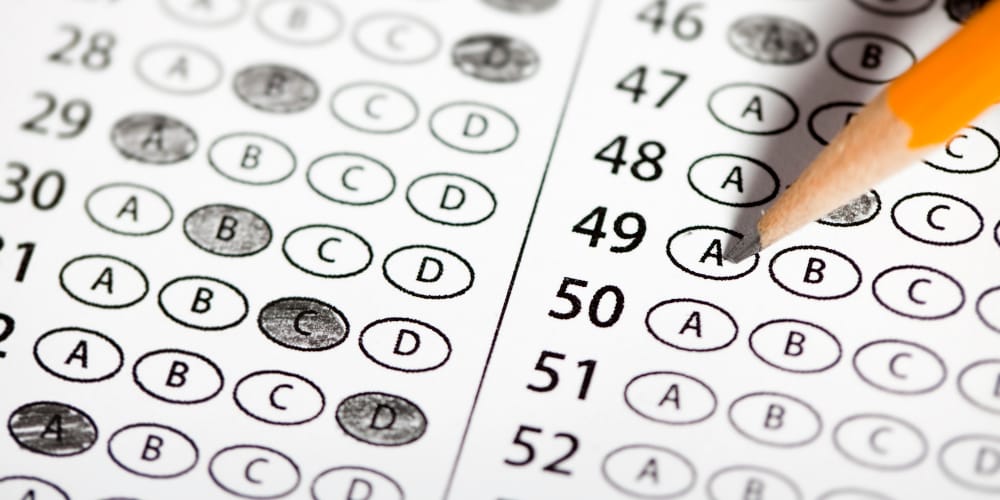
A wave of nostalgia is building for the No Child Left Behind era.
More governors are emphasizing accountability in their state speeches. Oregon recently enacted stricter school oversight. Some policy experts argue that backing away from testing pressure is partly why scores have stagnated.
Research from the NCLB period offers some support for this view. Studies found that the law produced real learning gains in math, especially in states that had to make bigger changes. Reading gains were less clear.
The catch?
NCLB also sparked massive backlash. Schools cut art, music, and science to focus on tested subjects. High-profile cheating scandals erupted. By 2007, a supporter called it "the most tainted brand in America."
Teachers and parents complained that schools focused too narrowly on test prep. The Obama administration's shift to holding individual teachers accountable for scores drew fierce opposition and research suggests the move didn't raise achievement nationally.
Still, some accountability hawks want to bring NCLB back now, pointing to solid evidence that school-level accountability could help math scores.
For companies in the education space, a return to stronger accountability could shift demand toward test prep tools, data analytics platforms, and intervention programs. But the political volatility around testing suggests any such policies might not last long.
Products that help schools respond to accountability pressure without narrowing curriculum could find the most sustainable market.
Kentucky District Teaches Digital Citizenship Across Every Subject

Eminence Independent School District in Kentucky has been weaving digital citizenship into nearly every class for over a decade.
Now they're updating their approach for the AI era with a $7,000 grant from ISTE+ASCD and Pinterest.
The roughly 1,000-student rural district created grade-level standards for soft skills back in 2012 as part of their "portrait of a graduate" framework. Every kindergartner presents publicly three times to over 100 people. Students learn video conferencing, slide creation, and ethical technology use across subjects.
When COVID hit in 2020, every student already knew how to video conference. The district went fully online within three days.
Now they're tackling AI. Superintendent Buddy Berry says the goal is to teach students to use it ethically.
Example: Math apps can solve problems and show the steps. Instead of banning them, the district teaches students to use them when stuck, not to copy answers and turn them in.
Berry's advice to other districts: "Start somewhere, try something. Even if it's a small little baby step, at least it's a step."
For education innovators, this model suggests demand for curriculum-integrated digital citizenship tools rather than standalone programs. Districts want resources that fit naturally into existing subjects and help teachers address AI ethics without creating new courses. Products that scale this approach while giving teachers practical classroom strategies could find traction as more schools realize they can't ignore AI.
⚡️More Quick Hits
This week in education:
• Structured literacy implementation gap — Analysis shows schools struggle to scale evidence-based reading instruction despite adoption commitments
• California district builds AI policy consensus — District demonstrates stakeholder engagement process that brought students, teachers, parents, and leaders into alignment on AI guidelines
• Multilingual curriculum design gap — Education leaders argue curriculum fails to leverage students' multilingual abilities as learning assets
• Early AI adopter insights — First-wave districts share lessons learned from integrating AI into instruction and operations
📚 Weekend Reads
Monthly roundup of resources you might like:
Academic Recovery Still Elusive — Data showing students need 4.8 additional months in reading and 4.3 months in math to reach pre-pandemic levels.
Current Term Enrollment Estimates — Spring 2025 undergraduate enrollment up 3.5% to 15.3 million students, with community colleges leading the resurgence at 5.4% growth
Educator Pay Rankings 2024-25 — State-by-state analysis showing average teacher salary reached $74,177, yet inflation has teachers earning 5% less than a decade ago
Public Confidence in Schools — Record-low public approval with only 13% giving schools an A or B grade, and 59% of parents preferring private school options with public funds
To stay up-to-date on all things education innovation, visit us at playgroundpost.com.
What did you think of today’s edition? |